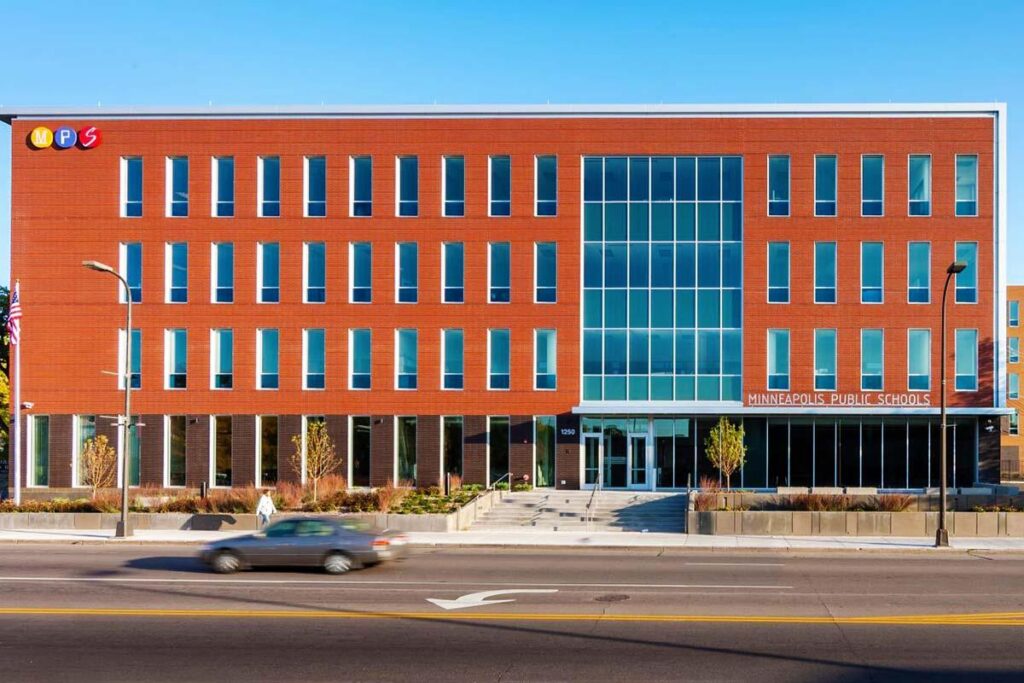


MINNEAPOLIS — Minneapolis Public Schools has unveiled a sweeping set of proposals that could dramatically reshape the district, including the potential closure or consolidation of more than a dozen schools.
District officials presented three possible “transformation” plans Tuesday night as MPS confronts declining enrollment, underused buildings and a budget shortfall approaching $40 million. The proposals could affect thousands of students and redraw attendance boundaries across Minneapolis.
The plans are not final. The school board has not voted to close the schools, and district officials are expected to gather public feedback before a decision is made.
Three plans, dozens of changes
All three proposals would eliminate existing academic programming at 14 schools, while additional schools could be affected depending on which option is ultimately selected.
The 14 schools included in all three proposals are:
- Anwatin
- Bethune
- FAIR High School for Arts
- Field
- Heritage Academy High School
- Hiawatha
- Hmong International Academy
- Kenny
- Lake Harriet Lower
- Lincoln
- Longfellow
- Loring
- Pratt
- Wenonah
Two additional schools — Cityview and Webster — could also be affected under some of the options, bringing the potential total to 16 buildings.
MPS is using the term “unprogramming” rather than simply calling the changes school closures. District officials say buildings that lose their current academic programs could potentially be used for other purposes in the future.


Enrollment decline driving the debate
A major factor behind the proposed changes is enrollment.
MPS currently serves roughly 29,000 students, while its buildings have capacity for approximately 43,000, according to district information reported by the Minnesota Star Tribune and FOX 9. More than half of district buildings have been identified as operating at 70% capacity or less.
The district says maintaining a large network of buildings with fewer students has contributed to financial pressure because resources must be spread across more schools.
Superintendent Lisa Sayles-Adams described the district as being “spread too thin,” arguing that the current footprint makes it difficult to direct resources toward students.
MPS is also dealing with a projected budget gap of about $39.7 million. District officials have pointed to declining enrollment, rising labor and operating costs and the expiration of federal pandemic relief funding as contributing factors.
Thousands of students could be affected
The proposed changes go beyond closing individual school buildings.
The plans also include school mergers and changes to attendance boundaries, meaning some students could be reassigned to different schools even if their current school remains open.
MPR News reports that between 12% and 14% of MPS students could be affected by mergers or boundary changes under the proposals.
For families, that could mean new schools, different transportation arrangements and changes to the communities students have become familiar with.
Parents who spoke during or after Tuesday’s meeting expressed concerns about the potential disruption and questioned whether closing schools is the right way to address the district’s financial problems.


District says difficult changes are necessary
District leaders argue that maintaining the status quo would not solve MPS’ underlying financial problems.
Sayles-Adams has said that continuing to operate a system with too many buildings and insufficient enrollment would result in additional cuts and continued instability.
School Board Chair Collin Beachy similarly said that maintaining the current structure would leave the district facing the same financial challenges year after year.
The proposals are part of a broader transformation process that MPS began several years ago in response to enrollment and financial challenges.
Parents and staff push back
The proposed closures have already generated strong reactions from parents, educators and community members.
Some families worry that closing neighborhood schools could weaken community connections and force students to travel farther. Others have questioned whether the district has adequately considered alternatives to closures.
The process itself has also drawn criticism. School Board Member Greta Callahan questioned the timeline and emphasized that the board is not obligated to approve any of the proposals presented by district administrators.
The district, meanwhile, says community input will be an important part of the process.
What’s next?
No schools have been officially closed as a result of Tuesday’s presentation.
MPS plans to collect feedback from families and community members through October before the proposals move forward. The school board is expected to consider the changes later in the year, with some changes potentially taking effect as early as the 2027–28 school year, depending on the final decisions.
That means the debate is only beginning.
For Minneapolis families, the coming weeks could determine where thousands of students attend school in the years ahead — and what the city’s public school system looks like for a generation to come.
The proposals represent one of the largest potential restructurings of Minneapolis Public Schools in years, but the final outcome remains undecided.