A fascinating four-color Commander experience packed with alternate-universe legends, explosive creatures, and a creative token-transformation strategy.
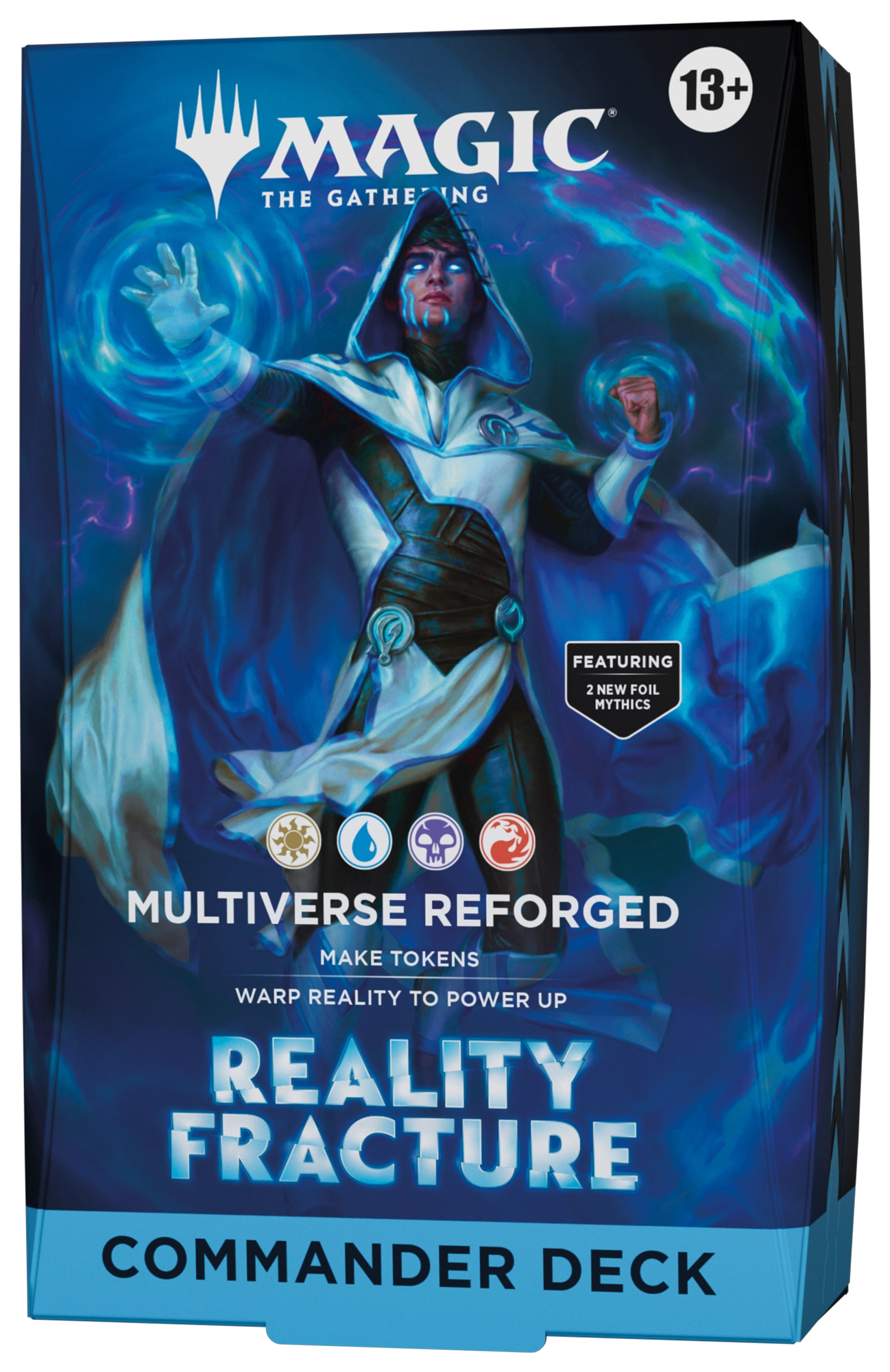
Wizards of the Coast takes players into an alternate version of the Magic multiverse with Reality Fracture: Multiverse Reforged, a Commander preconstructed deck built around one of the game’s most recognizable planeswalkers, Jace. Rather than simply assembling an army of creatures and overwhelming opponents through traditional combat, this deck takes a more unusual approach: create small creature tokens, transform them into bigger threats, and unleash some of the most powerful legends in its alternate reality.
The result is a Commander deck with an intriguing identity, plenty of personality, and a strategy that rewards players who enjoy building toward explosive turns.
Jace Takes Command
At the center of the deck is Jace, Multiverse Architect, a four-color commander representing white, blue, black, and red. His presence establishes the deck’s central theme of manipulating the battlefield and turning relatively modest resources into major threats.
The deck also includes Nissa, Leyline Tamer as an alternative commander. Nissa offers a different approach, rewarding landfall triggers and helping players bring powerful creatures onto the battlefield.
Having two distinct commander options adds welcome flexibility. Jace is the natural choice for the deck’s signature token-transformation strategy, while Nissa offers an alternative for players who want to explore a more creature-focused approach.
Turning Small Tokens Into Massive Threats
The most interesting feature of Multiverse Reforged is its creature-transformation strategy.
Cards such as Mass Polymorph, Synthetic Destiny, and Proteus Staff help turn smaller creatures and tokens into much more dangerous battlefield threats. Instead of spending several turns casting expensive creatures individually, players can establish a collection of tokens and use those resources to bring larger creatures into play.
This creates some genuinely exciting possibilities. A seemingly harmless token-producing turn can quickly become a major battlefield development when the right transformation spell resolves.
The strategy also gives the deck a distinct personality. It isn’t simply another collection of powerful creatures held together by a popular commander. There is an actual game plan, and the deck encourages players to think carefully about when to create tokens and when to convert them into something bigger.
The Alternate-Universe Legends Steal the Show
One of the biggest attractions is the collection of Echoverse versions of familiar Magic characters.
The deck features alternate takes on characters including Ob Nixilis, Avacyn, Omnath, Dack Fayden, Jhoira, Venser, Tamiyo, and Niv-Mizzet.
These versions give the product a strong identity and make opening the deck an interesting experience for longtime Magic players. Seeing recognizable characters reimagined with different colors, abilities, and roles is one of the strongest thematic elements of the entire release.
The new versions also provide some of the deck’s most memorable gameplay moments, particularly when they arrive through one of the deck’s transformation effects.
The Cards That Make the Difference
Several reprints help give Multiverse Reforged its power and value.
Flawless Maneuver provides important protection for your creatures, while Archon of Cruelty and Archfiend of Despair give the deck serious late-game power.
Shark Typhoon provides additional token generation, and Overlord of the Mistmoors gives players another way to establish a battlefield presence.
The inclusion of Reflecting Pool, Arcane Signet, several Talismans, and other mana-fixing options is also important. With four colors to manage, having reliable access to the right mana is essential.
These reprints make the deck appealing beyond its new cards, particularly for players looking to expand their Commander collections.
Where the Deck Struggles
Despite its creative concept, Multiverse Reforged isn’t without weaknesses.
Its biggest challenge is consistency. The transformation strategy depends on having the right combination of token generators and cards that can convert those tokens into larger threats. Drawing one half of the strategy without the other can leave the deck feeling less threatening than expected.
Jace is also an important part of the overall game plan. If opponents repeatedly remove him, the deck can lose some of the momentum that makes its strategy work.
The mana base is another area that could benefit from improvement. Four-color decks demand dependable fixing, and players who regularly face aggressive opponents may find that some of the slower lands interfere with their early development.
Fortunately, these weaknesses are manageable. A few carefully selected upgrades can improve the deck’s consistency without sacrificing its central identity.
Final Verdict
Multiverse Reforged succeeds because it offers something different from the typical Commander experience. Its token-transformation strategy creates exciting opportunities, its alternate-universe legends provide plenty of personality, and its selection of reprints gives players several useful additions to their collections.
It isn’t a perfect preconstructed deck. The reliance on assembling specific pieces can occasionally slow things down, and the mana base deserves attention. However, those shortcomings don’t erase the creativity behind the design.
For players who enjoy unusual strategies, powerful creatures, and the opportunity to transform an ordinary battlefield into something extraordinary, Multiverse Reforged is an appealing addition to the Commander lineup.
Final Score: 8.5/10
The Bottom Line: Multiverse Reforged isn’t just about playing bigger creatures. It’s about changing the rules of the battlefield, turning disposable tokens into devastating threats, and watching Jace’s vision of a new multiverse take shape one spell at a time.