Rating: 8.5/10
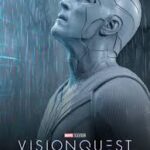
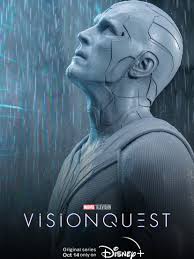
Marvel’s latest Disney+ series opens with a thoughtful, occasionally brutal premiere that asks viewers to look beyond Vision’s abilities and examine the emotional emptiness left behind by his resurrection. Rather than immediately throwing him into another world-ending conflict, “No Strings” places him in a quieter environment, where the greatest challenge is understanding the very humanity he has spent so much of his existence trying to protect.
A Life Without a Clear Purpose
The episode finds Vision living and working in Edinburgh, Scotland, attempting to maintain a low profile while making sense of his identity. Although he possesses extraordinary intelligence, his understanding of human connection remains incomplete. His ordinary surroundings offer him opportunities to observe people, but observation is not the same as truly understanding them.
This is an effective starting point for a character whose history has been defined by extraordinary circumstances. Vision has experienced love, death, resurrection, and the painful complications of being a creation with a conscience. Now, stripped of the familiar certainty that once defined him, he must figure out what remains.
The premiere’s strongest moments come when it allows that uncertainty to breathe. Vision is fascinating not simply because he is powerful, but because he can analyze human behavior without necessarily understanding its emotional significance.
The AI Voices Inside Vision’s Mind
One of the episode’s most intriguing elements is Vision’s interaction with the artificial intelligence personalities embedded in his programming. F.R.I.D.A.Y., E.D.I.T.H., and J.A.R.V.I.S. provide different perspectives as he attempts to understand himself, while Ultron represents a far more dangerous influence.
The return of James Spader as Ultron is particularly exciting. Spader brings a distinctive combination of charm, intelligence, and menace to the character, making even a philosophical conversation feel like a battle for control.
Ultron is more than a familiar Marvel villain making another appearance. His presence challenges Vision to consider whether his beliefs are truly his own or whether his origins continue to influence the way he sees the world. That conflict gives the series a psychological dimension that separates it from a conventional superhero adventure.
The dynamic between Paul Bettany and Spader is one of the premiere’s biggest strengths. Their opposing perspectives create tension without requiring constant action, and their scenes suggest that the most consequential battles in this series may take place inside Vision’s own mind.
When the Quiet Life Falls Apart
The episode eventually shatters Vision’s fragile routine. Violence erupts at the pub where he works, and the attack leaves him facing a threat that cannot be solved simply by hiding. The death of his employer, Mrs. Guthrie, is a particularly disturbing turning point, forcing Vision into a much more ruthless response than his peaceful existence might suggest.
The sequence provides the premiere with its most immediate burst of action, but its real significance is what it reveals about Vision. He remains capable of overwhelming force, yet the question is how he chooses to use it—and what that choice might do to his developing sense of identity.
The introduction of the Paladin, the figure connected to the attack, also establishes a dangerous new adversary. Vision’s attempt to disappear has failed, and the series now has a clear engine for its next chapter: survival, discovery, and the consequences of being hunted.
Paul Bettany Anchors the Story
Bettany gives the premiere a controlled, introspective performance. He understands that Vision’s emotional restraint is not the same as a lack of feeling. Instead, the character seems to be searching for a language that can explain experiences he cannot fully process.
That distinction is essential. A less nuanced performance could make Vision appear cold or distant, but Bettany gives his uncertainty an understated poignancy. Even when the story moves into action, the character’s internal struggle remains central.
Spader provides an effective counterbalance. Ultron’s confidence and unsettling sense of humor make him an entertaining presence, but there is an underlying danger in the way he challenges Vision’s assumptions about humanity.
Together, the performances give the premiere a compelling foundation—even when the narrative occasionally gets bogged down in its own mythology.
What Works—and What Holds It Back
The biggest strength of “No Strings” is its willingness to explore a character’s identity rather than simply use him as another piece in Marvel’s expanding universe. The episode also benefits from its contrasting atmosphere: quiet introspection gives way to sudden violence, emphasizing how precarious Vision’s new life really is.
However, the premiere can feel dense as it introduces its central mystery, multiple AI personalities, and the forces pursuing Vision. Viewers unfamiliar with the events of WandaVision may find themselves needing a refresher, while those expecting nonstop superhero spectacle could be surprised by the deliberate pacing.
Some of the philosophical exchanges are more effective than others, and the premiere occasionally feels as though it is setting the table for a more compelling story rather than delivering a fully satisfying one on its own.
Still, these shortcomings do not erase the episode’s considerable promise. The character drama, the central conflict, and the return of Ultron give VisionQuest a distinct identity.
Final Verdict: A Promising New Chapter for Vision
“No Strings” is a strong opening episode that understands the most interesting thing about Vision is not what he can do, but what he is still trying to understand. By placing him in a vulnerable position and surrounding him with competing ideas about humanity, the premiere establishes a personal conflict with potentially significant consequences.
Bettany delivers an absorbing performance, Spader makes Ultron’s return a highlight, and the sudden collapse of Vision’s quiet life gives the story the momentum it needs. The premiere is not without pacing issues, but its thoughtful approach makes it more than another routine Marvel launch.
VisionQuest has begun with a compelling question: can Vision discover his own humanity without allowing the darkness of his past to define him?
If the series continues to explore that conflict with the same care, it could become a memorable conclusion to the television story that began with WandaVision.
WDEP Radio Rating: 8.5/10 — A thoughtful, tense, and promising premiere powered by strong performances and an intriguing identity crisis.