Writer: Ms. Charlotte
FULL-SEASON BLOG REVIEW • SPOILERS
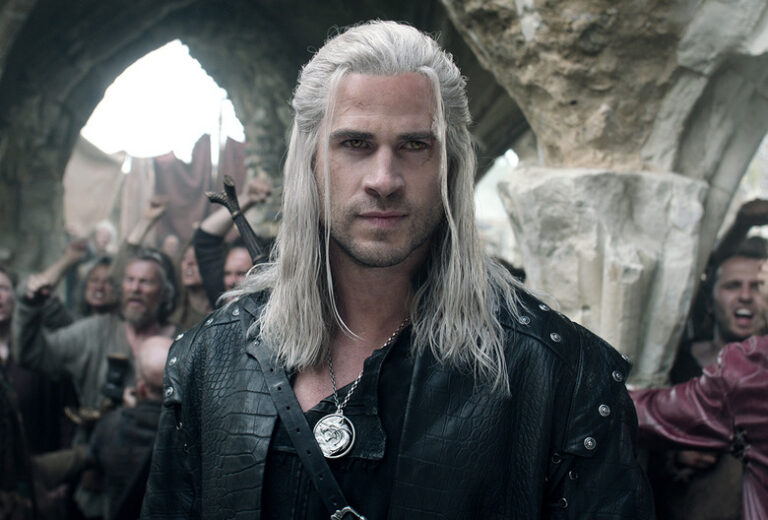
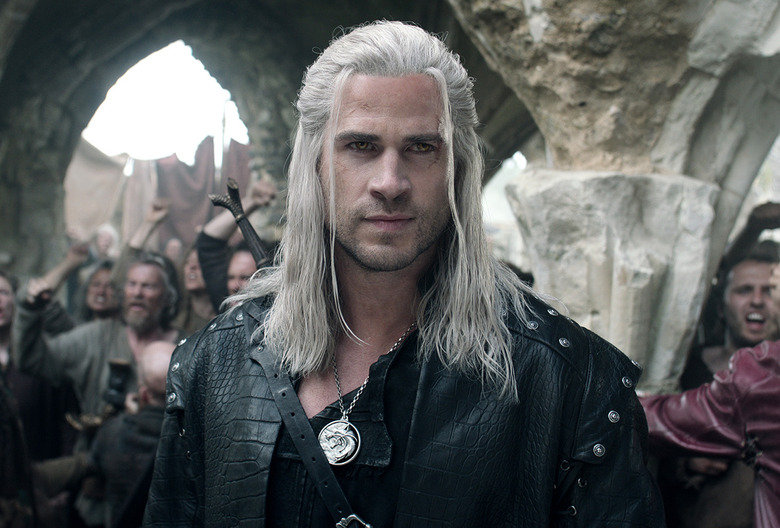
Season 4 arrives carrying an unusual burden. It must continue the story after the explosive separation of Geralt, Yennefer, and Ciri while also introducing Liam Hemsworth as Geralt following Henry Cavill’s departure. The smartest choice the season makes is not pretending nothing has changed. This is already a story about transformation, identity, and people becoming different versions of themselves. The new Geralt enters during a period when the character himself is wounded, exhausted, and changing.
The season is structured around three separate journeys. Geralt is trying to reach Ciri. Yennefer is confronting the aftermath of the magical world’s collapse and the threat posed by Vilgefortz. Ciri is living with the Rats under the name Falka. The emotional engine is separation: everyone is moving, but the people who most need one another remain apart.
Geralt’s storyline gradually expands beyond a rescue mission. He begins accumulating companions, creating the group traditionally known as his hanza. Milva brings skill and blunt practicality. Zoltan adds another familiar connection. Cahir’s relationship to Geralt becomes more complicated as old loyalties and crimes are forced into the open. Most intriguing is Regis, portrayed by Laurence Fishburne. Regis is a higher vampire whose intelligence, restraint, and humanity challenge the easy distinction between human and monster that the series has questioned from its beginning.
The developing hanza gives Geralt something he rarely admits he needs: community. His instinct is to carry burdens alone, but the journey toward Ciri increasingly becomes collective. That mirrors one of the show’s oldest themes. Geralt is at his best when the story proves his self-image wrong. He calls himself detached; his actions reveal attachment everywhere.
Yennefer’s storyline moves her from survivor toward leader. The destruction surrounding Aretuza and Tissaia’s death have changed her. Vilgefortz is no longer merely a traitor to the Brotherhood. He is a direct threat to Ciri and to the remaining magical order. At Montecalvo, the conflict escalates into open confrontation. Vilgefortz’s manipulation of portals and captive magical power reveals the scale of his ambition.
Istredd’s role becomes tragic as the fight against Vilgefortz demands sacrifice. The destruction of Vilgefortz’s portal advantage comes at a severe cost, while Yennefer’s confrontation with him reveals something worse: his interest in Ciri’s Elder Blood is not theoretical. He intends to exploit her power through a brutal magical procedure. For Yennefer, the threat becomes intensely personal. The girl she has come to love as a daughter is being reduced by another powerful man to something that can be used.
Ciri’s storyline is arguably the season’s darkest. Life with the Rats initially gives her what Geralt and Yennefer cannot currently provide: immediacy, belonging, and freedom from the title of Princess Cirilla. As Falka, she can pretend that history has released its grip on her. Her relationship with Mistle deepens that attachment.
But freedom with the Rats carries its own danger. Violence becomes easier. The line between surviving cruelty and adopting cruelty begins to blur. Ciri’s Falka identity allows her to push away grief, responsibility, and fear, but it also risks pushing away parts of herself.
The season repeatedly returns to the difference between blood family and chosen family. Emhyr is Ciri’s biological father, yet his interest in her is entangled with empire, lineage, and prophecy. Geralt is not her biological father, but his life is increasingly organized around protecting her. Yennefer is not her biological mother, yet her response to Vilgefortz’s plans is unmistakably maternal. The Rats become another chosen family for Ciri, although one rooted in rebellion and danger.
Then Leo Bonhart arrives and destroys the illusion that Ciri can simply disappear into the identity of Falka. His attack on the Rats is devastating. The life Ciri has chosen is ripped away, and she ends the season captive rather than free.
That ending is important because Season 4 is fundamentally a bridge into the final chapter. Geralt has found companions but not Ciri. Yennefer has survived and grown into leadership but has not eliminated Vilgefortz. Ciri has experimented with becoming Falka only to discover that changing her name cannot erase the forces pursuing her.
Liam Hemsworth’s arrival will inevitably be the most discussed element of the season. Comparing two actors is unavoidable, but the more useful question is whether the story still understands Geralt. The character remains defined less by how much he speaks than by what he refuses to abandon. His road toward Ciri continues to expose the same truth that has followed him since Season 1: the man who insists he can live without attachment repeatedly risks everything for the people he loves.
Season 4 is less about reunion than preparation. It widens Geralt’s family, hardens Ciri, elevates Yennefer’s leadership, and positions Vilgefortz and Bonhart as immediate threats going into the final season. It does not provide emotional closure because its purpose is to make closure urgently necessary.
BLOGGER’S VERDICT: Season 4 is a transition season in every sense—new Geralt, new alliances, new dangers, and a Ciri moving further from the girl we first met. Its central question is no longer whether destiny can bring this family together, but whether love can find them after the world has changed each of them.