Spoilers ahead for Lanterns Season 1, Episode 7.
After spending much of its first season building a murder mystery around Hal Jordan, Lanterns finally gives its most complicated character the spotlight he deserves.
“The Jordan Boys’ Legacy” is a deeply personal penultimate episode that pulls the story away from the familiar crime-thriller setting and digs into the childhood experiences, family history and emotional wounds that helped shape Hal Jordan.
And remarkably, it does this after Hal is already dead.
The result is one of the season’s most ambitious and emotionally effective episodes.
Hal Jordan Gets His Story
Kyle Chandler has been one of the show’s strongest performers from the beginning, but Episode 7 gives him an opportunity to play a very different version of Hal.
Through the Halogram stored within his Green Lantern ring, viewers get to experience a version of Hal who is younger, more energetic and considerably less beaten down by life.
That distinction is crucial.
The Hal viewers knew before his death was bitter, exhausted and increasingly isolated. The Halogram is still stubborn and arrogant, but there’s also humor and warmth underneath the rough exterior.
The episode effectively asks a fascinating question:
What happened to that man?
The answer is painful.
The Jordan Family Legacy
The episode flashes back to 1975, introducing a young Hal and his father, Martin.
Young Hal’s refusal to leave a baseball game after his coach tries to remove him from the mound immediately establishes one of the defining characteristics that will follow him throughout his life: he simply refuses to let go.
Martin reinforces that attitude rather than correcting it.
But Martin also gives Hal something much more complicated: a family secret.
The Jordan men have carried a history of emotional suffering from one generation to the next. Martin reveals that his own father died by suicide, and eventually Hal learns that Martin’s death wasn’t the accident everyone believed it was.
The revelation adds an entirely different dimension to Hal’s character.
His fearlessness isn’t necessarily courage.
It’s something darker.
As the episode reveals, Hal has spent much of his life carrying pain that he never fully understood.
The Baseball Becomes a Powerful Symbol
One of the smartest elements of the episode is the recurring baseball.
Martin tells young Hal that he can’t hold onto the ball forever because doing so is exhausting.
It’s an obvious metaphor, but the episode earns it.
Hal spends his entire life holding on—to his father’s legacy, his identity, his Green Lantern ring, his career, his mistakes and ultimately the past itself.
The young Hal eventually throws the baseball.
But decades later, he goes back to retrieve it.
That final image is devastating because it tells us everything we need to know about Hal without requiring another exposition-heavy speech.
Hal never really learned how to let go.
John Stewart Finally Gets the Partner He Needed
One of the episode’s biggest surprises is how entertaining the relationship between John and the Halogram becomes.
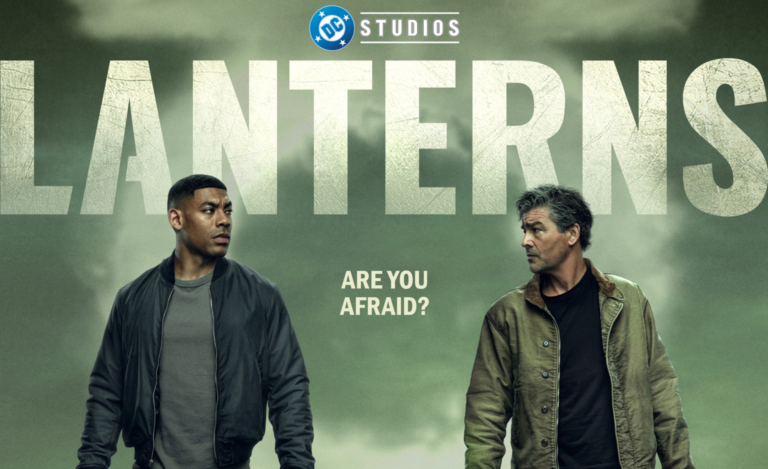
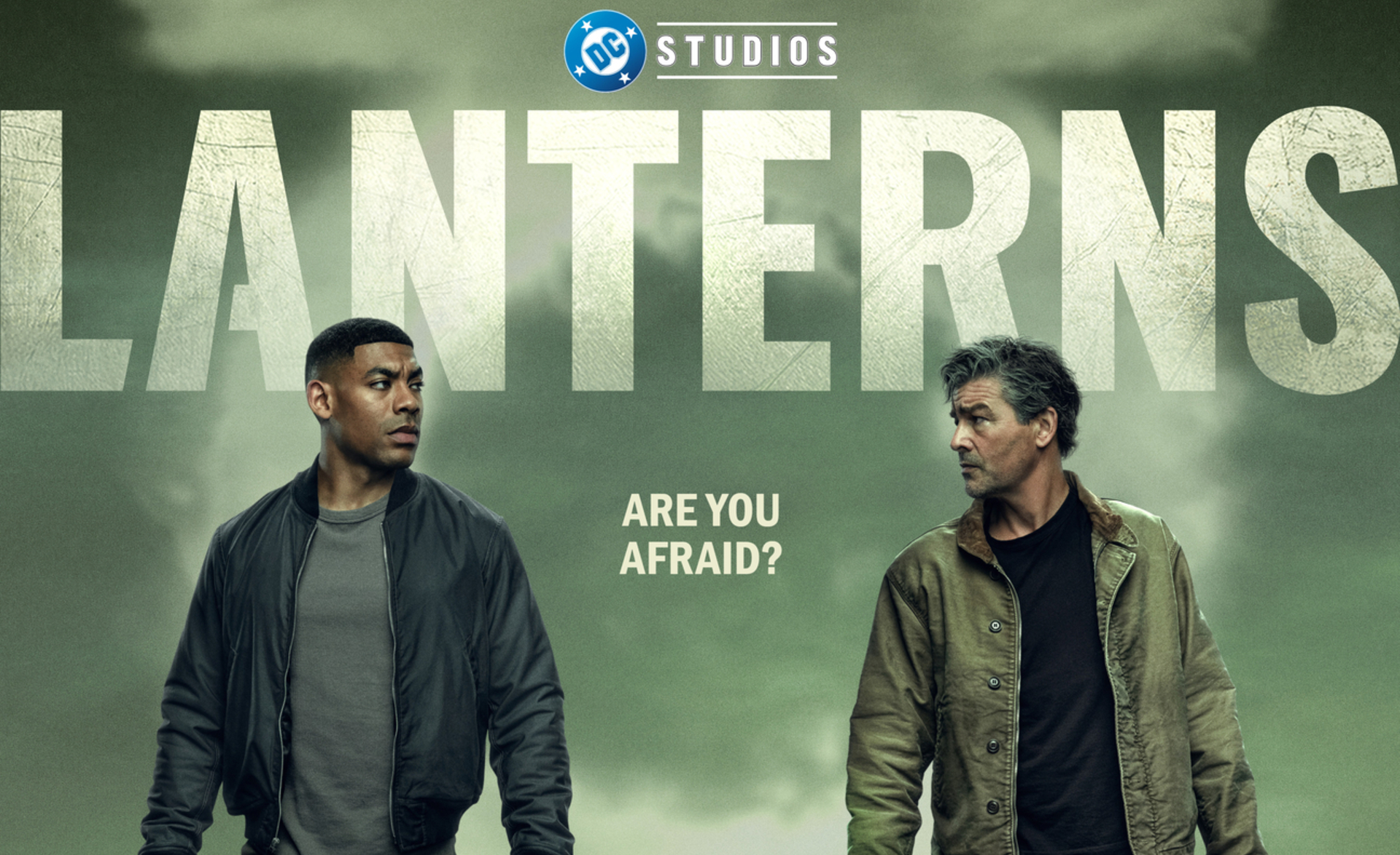
Aaron Pierre and Kyle Chandler have tremendous chemistry, and the show finally delivers the buddy-cop dynamic that viewers may have expected earlier in the season.
Except there’s a major difference.
This Hal isn’t physically alive.
That creates a strange combination of comedy and sadness.
John can literally shut Hal off when he gets annoying. Hal, meanwhile, is trying to understand what happened to him while discovering that the world moved on without him.
The two characters argue, joke and investigate together, but there’s an emotional undercurrent to everything they do.
John wanted a mentor.
Hal might finally have become the mentor John needed.
Unfortunately, it’s too late.
Kerry and Hal’s Reunion Is Heartbreaking
Kelly Macdonald also gets some excellent material as Kerry Kane.
When the Halogram appears before her, the scene could easily have become melodramatic.
Instead, Macdonald plays the moment with restraint.
This isn’t simply a woman seeing the ghost of someone she loved.
It’s a woman confronting a version of that person who looks and sounds like him but isn’t exactly the man she remembers.
The emotional complexity of the scene is outstanding.
And it raises even more questions about Kerry’s role in Hal’s death.
Did Hal Kill Himself?
This is where the episode becomes particularly clever.
For much of the season, the central question has been:
Who killed Hal Jordan?
Episode 7 turns that question upside down.
The Halogram initially suspects Kerry, but as he learns more about his own history, even he begins considering another possibility: perhaps Hal wasn’t murdered at all.
Perhaps Kerry discovered his body and covered up what happened.
Perhaps Hal’s death was connected to the same generational pain that haunted his father and grandfather.
But Lanterns doesn’t provide a definitive answer yet.
And that’s exactly what makes the mystery work.
The series still has one episode remaining, and the writers wisely keep enough uncertainty alive to make the finale matter.
Then the Story Goes Cosmic
Just when the episode feels like an intimate family drama, Lanterns dramatically expands its scope.
John and the Halogram travel through a portal connected to Hal’s hidden belongings and arrive on a devastated alien world.
The imagery is striking.
What had been an Earthbound murder mystery suddenly becomes a much larger Green Lantern story involving the Manhunters, alien civilizations and Sinestro.
The discovery that an entire world was destroyed by the Manhunters gives the larger mythology genuine weight.
This isn’t simply a superhero mystery anymore.
The consequences are enormous.
Sinestro Returns to the Picture
Ulrich Thomsen’s Sinestro remains one of the show’s most intriguing wild cards.
His appearance near the end of the episode immediately raises the stakes heading into the finale.
More importantly, the episode suggests that Hal’s death may be connected to events far larger than the people of Rushville realize.
The writers have spent most of the season making Lanterns feel like a small-town murder mystery.
Episode 7 finally pulls back the curtain.
There’s a much bigger universe hiding behind it.
The Performances Are Outstanding
Kyle Chandler does some of his best work of the season here.
His performance as the Halogram allows him to show a more playful, adventurous version of Hal while still maintaining the character’s underlying sadness.
Aaron Pierre continues to bring intensity and emotional restraint to John Stewart, and his scenes with Chandler are among the episode’s strongest.
Kelly Macdonald is equally impressive, particularly during Kerry’s reunion with the Halogram.
The performances prevent the episode’s heavier themes from becoming simply exposition.
These characters feel wounded, complicated and human.
Final Verdict
“The Jordan Boys’ Legacy” is Lanterns at its most ambitious and emotionally effective.
Instead of simply answering the murder mystery, the episode makes us reconsider who Hal Jordan was and why he became the man we saw during the first half of the season.
The decision to explore Hal’s childhood after his death could have felt like a gimmick.
Instead, it becomes the emotional centerpiece of the season.
The episode also successfully connects the intimate family drama to the larger Green Lantern mythology, setting up a finale that now has considerably more on the line than simply identifying Hal’s killer.
The final image of young Hal returning for the baseball he was told to throw away is particularly powerful.
He could never let go.
And now John Stewart may have to carry that legacy forward.
Rating: 9.5/10
Bottom Line
Lanterns delivers its strongest character episode yet. “The Jordan Boys’ Legacy” gives Hal Jordan the tragic backstory he needed, deepens John Stewart’s journey and finally connects the show’s grounded murder mystery to the larger cosmic mythology. With Sinestro back in play and the truth about Hal’s death still unresolved, the stage is set for a potentially explosive season finale.