Threat-assessment experts say Minnesota needs more than awareness to prevent violence. It needs the people, systems and resources to turn warning signs into action.
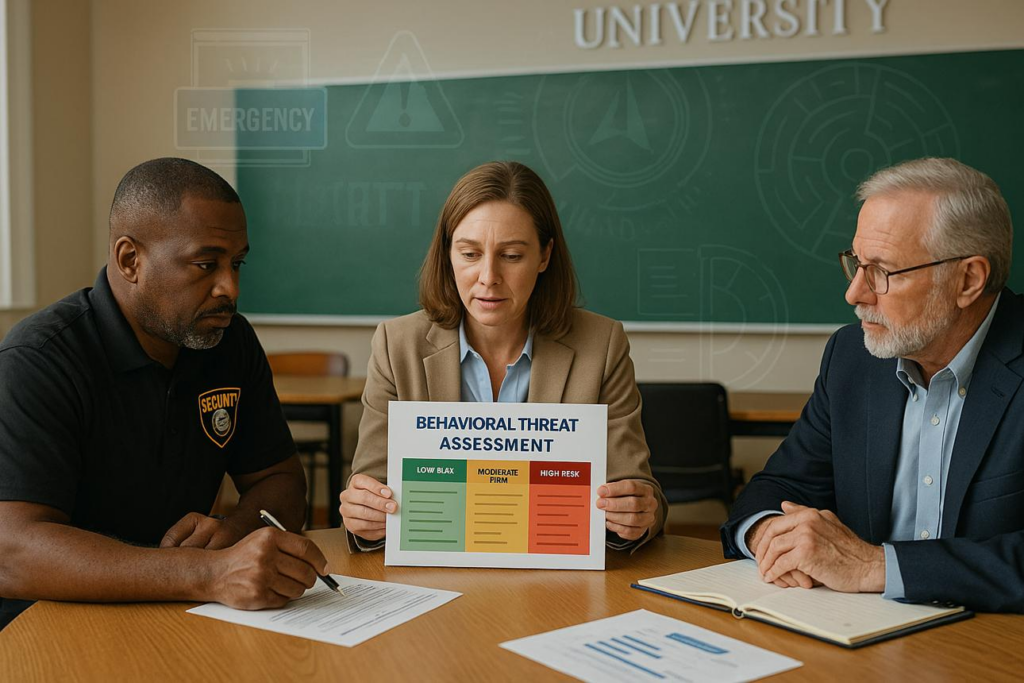
Minnesota is confronting a difficult question about violence prevention: What happens when the warning signs are visible, but the systems responsible for responding to them are not connected well enough to act?
Threat-assessment experts say concerning behavior can emerge gradually. Changes in behavior, escalating grievances, threatening communications, fixation or other troubling patterns can sometimes provide opportunities for intervention before a situation becomes dangerous.
But recognizing a warning sign is only the beginning.
The harder challenge is making sure someone receives the information, knows how to evaluate it and has the resources to respond.
The warning signs are not a prediction
Threat assessment is not about identifying a person as a future criminal or assuming that a particular behavior means violence is inevitable.
The University of Minnesota’s Threat Assessment Program describes its approach as multidisciplinary, proactive and behavior-based, with an emphasis on early intervention, risk reduction and coordinated collaboration.
The university also cautions that no single behavior automatically means someone will become violent. Patterns and circumstances have to be considered together.
That distinction matters.
A person can be angry, isolated, struggling or outspoken without posing a threat. Prevention works best when trained professionals examine behavior in context rather than relying on stereotypes or assumptions.
The goal is not to predict who will become violent.
The goal is to recognize when a situation may be escalating and determine what can be done about it.
Minnesota is building new reporting tools
Minnesota lawmakers have already taken steps toward creating a more consistent reporting structure.
A law signed in May requires every school district and charter school to adopt a policy for an anonymous threat-reporting system by June 30, 2027, and implement either a local or statewide system by July 1, 2028.
The systems are designed to accept anonymous reports involving dangerous, violent, threatening, harmful or potentially harmful activity connected to school property, students or school personnel.
For local systems, reports are to be forwarded to designated school staff, the Bureau of Criminal Apprehension and local law enforcement as soon as practicable. Schools must also train the staff responsible for receiving and responding to reports.
A reporting system is only as good as the response behind it
That is where the larger challenge emerges.
A tip does not prevent violence simply because someone submitted it.
Someone has to receive it. Someone has to evaluate it. Someone has to determine whether the concern is credible, whether behavior is escalating and what resources may be appropriate.
That can require school administrators, behavioral-health professionals, social-service providers, law enforcement and other community partners working together.
Minnesota’s new law specifically recognizes that multidisciplinary model. It defines potential “noncriminal justice partners” to include school administrators, behavioral-health and social-service providers, community partners, medical personnel and public-safety professionals.
The state has also appropriated $4 million for anonymous threat-reporting systems and another $1 million for Bureau of Criminal Apprehension staffing and operating costs related to threat assessment and investigations.
Those investments point toward a larger lesson: prevention requires infrastructure.
The people behind the system matter
Minnesota’s own targeted-violence prevention strategy calls for building awareness and capacity, developing state threat-assessment and management capabilities, connecting people with appropriate resources and continuously evaluating the effectiveness of prevention efforts.
That means the conversation cannot stop with apps, hotlines or reporting forms.
Schools need trained personnel.
Communities need behavioral-health resources.
Investigators need the capacity to follow up.
Professionals need mechanisms for sharing appropriate information while protecting privacy and individual rights.
And families and students need to know where to turn when something does not feel right.
Prevention is about connecting the dots
The most important shift may be cultural as much as technological.
People need to feel comfortable reporting a concern before it becomes an emergency. Professionals need to take reports seriously without automatically treating them as proof of wrongdoing.
And the systems receiving those reports need to be capable of distinguishing between ordinary conflict, someone in crisis and a potentially escalating threat.
That requires judgment.
It also requires communication.
A concerning piece of information sitting in isolation may not reveal much. Combined with other information that is appropriately and lawfully shared, it may provide a clearer picture of what is happening.
That is the promise of behavioral threat assessment: not certainty, but an opportunity to intervene earlier.
Minnesota’s next test
Minnesota has begun putting pieces of that system into place.
The state has new requirements for anonymous reporting. It has funding for those systems. It has a statewide strategy focused on threat assessment and prevention. And institutions such as the University of Minnesota already use multidisciplinary approaches centered on early intervention.
The question now is whether those pieces become a genuinely connected statewide prevention network.
Because warning signs alone do not save lives.
People do.
Trained people who recognize concerning behavior. Professionals who know how to assess it. Counselors and health providers who can connect someone to help. Investigators who can follow up. Schools and agencies that know how to communicate.
The warning signs may be there.
The harder question is whether Minnesota has built enough of the system needed to recognize them — and act before a warning becomes a tragedy.