By Staff Writer
September 14, 2026


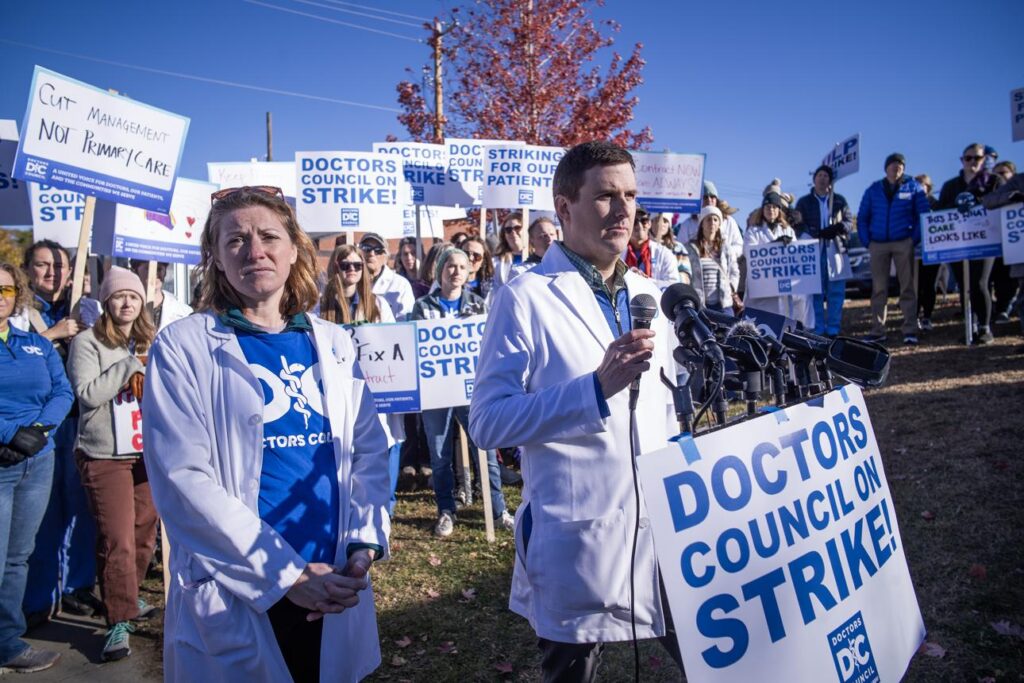
More than 150 Allina Health physicians walked off the job Monday, beginning a four-day strike at two hospitals in Minnesota’s north metro as a years-long labor dispute reaches a critical point.
The doctors, represented by Doctors Council-SEIU, are striking at Mercy Hospital in Coon Rapids and Allina’s Unity campus in Fridley. The work stoppage is scheduled to run from Monday, Sept. 14, through Thursday, Sept. 17.
The physicians include hospitalists, OB-GYNs, psychiatrists and critical-care doctors. Their union says negotiations have continued for roughly three years without producing a first contract.
A dispute years in the making
The strike is the latest escalation in a labor battle that began after physicians organized with Doctors Council-SEIU.
Union members say they are seeking better working conditions, paid sick leave and time off, stronger protections for physicians and a greater voice in decisions affecting patient care. The Minnesota Medical Association has also reported that physicians have raised concerns about their role in decisions involving artificial intelligence and Allina’s noncompete agreements.
The doctors voted overwhelmingly to authorize a strike. The union said approximately 91% of members supported the move in a June vote.
For physicians who have spent years negotiating without a contract, Monday’s walkout represents a significant turning point.


What Allina Health says
Allina Health has maintained that it has plans in place to keep both campuses operating during the strike.
The health system says the union represents about 10% of the physicians credentialed to provide care at Mercy’s two campuses, and that not all physicians represented by the union will participate in the strike. Allina estimates that fewer than 4% of the medical staff will actually be on strike.
The hospital system says patients should continue receiving care and that affected patients will be contacted directly if scheduling changes become necessary. Its patient notice says the Coon Rapids and Fridley campuses will remain open during the work stoppage.
Allina has also pointed to rising costs, pressure on reimbursements, insurance claim denials and uncertainty surrounding future health care policy as factors complicating contract negotiations.
The company says it remains committed to reaching agreements with both unions.
Patient care is the central question
For patients, the biggest concern is whether a physician strike will affect access and the quality of care.
Allina says it has activated contingency plans designed to maintain safe, high-quality care. The health system says Mercy will continue normal operations and that additional staffing plans are in place.
But the dispute itself is rooted partly in physicians’ concerns about the conditions under which they provide that care.
The union argues that doctors need greater influence over decisions affecting their work and patients. From that perspective, the contract fight is about more than wages. It is also about working conditions, professional autonomy and the ability of physicians to advocate for patients.
That makes the four-day strike more than a traditional compensation dispute.
Another Allina labor action is happening at the same time
The physicians’ strike comes as approximately 60 Allina Health hospice nurses are also on strike.
Those nurses began a seven-day strike Friday and provide end-of-life care in patients’ homes and other care settings. Their demands include higher wages, holiday pay and scheduling improvements.
The overlapping labor actions have put additional attention on Allina’s relationship with its unionized workforce.
Allina says the hospice strike does not involve nurses working inside its hospitals and that it is using available licensed nursing staff and contract nurses to maintain continuity of hospice care.

A broader labor story for Minnesota health care
The strike also comes at a moment of increasing labor organizing among health care workers.
Last year, hundreds of Allina primary care physicians and other advanced-care providers staged a one-day strike in what was described as the first strike involving physicians in Minnesota. That group later reached a three-year contract with Allina.
The current dispute involves a different group of physicians — hospital-based doctors working at Mercy’s Coon Rapids and Unity’s Fridley campuses.
That distinction is important because these physicians work directly in inpatient and critical-care settings, making staffing during a prolonged dispute particularly consequential.
The current walkout is scheduled for only four days, but the underlying contract dispute has lasted years.
What happens next?
For now, both sides remain apart.
The physicians have begun their scheduled four-day strike, while Allina says it will continue providing care and negotiating with the union.
The immediate test will be whether the health system can maintain normal operations while enough physicians remain on the picket line to make the union’s demands impossible to ignore.
For the doctors, the strike is an extraordinary step after years of unsuccessful negotiations.
For Allina, it is a test of whether its contingency plans can deliver on its promise that patients will see little or no disruption.
And for patients at Mercy Hospital and Unity, the hope is that the labor dispute remains exactly that — a dispute between the employer and its physicians — rather than becoming a disruption in the care they depend on.
The four-day strike is scheduled to continue through Sept. 17.