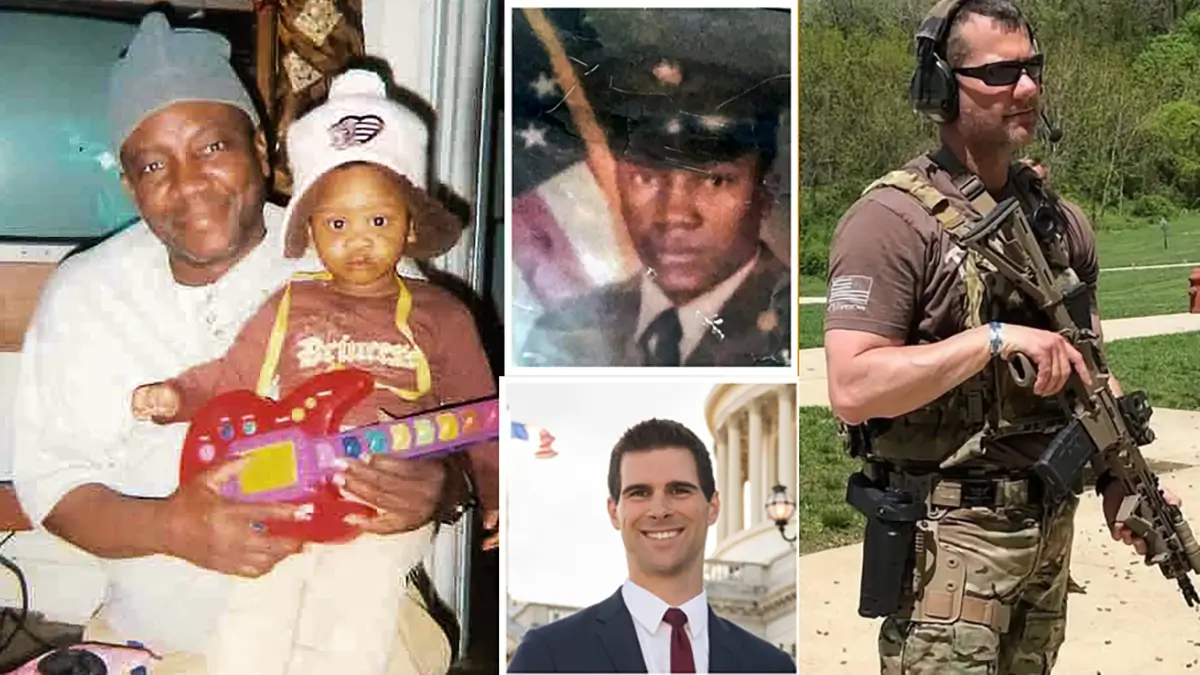
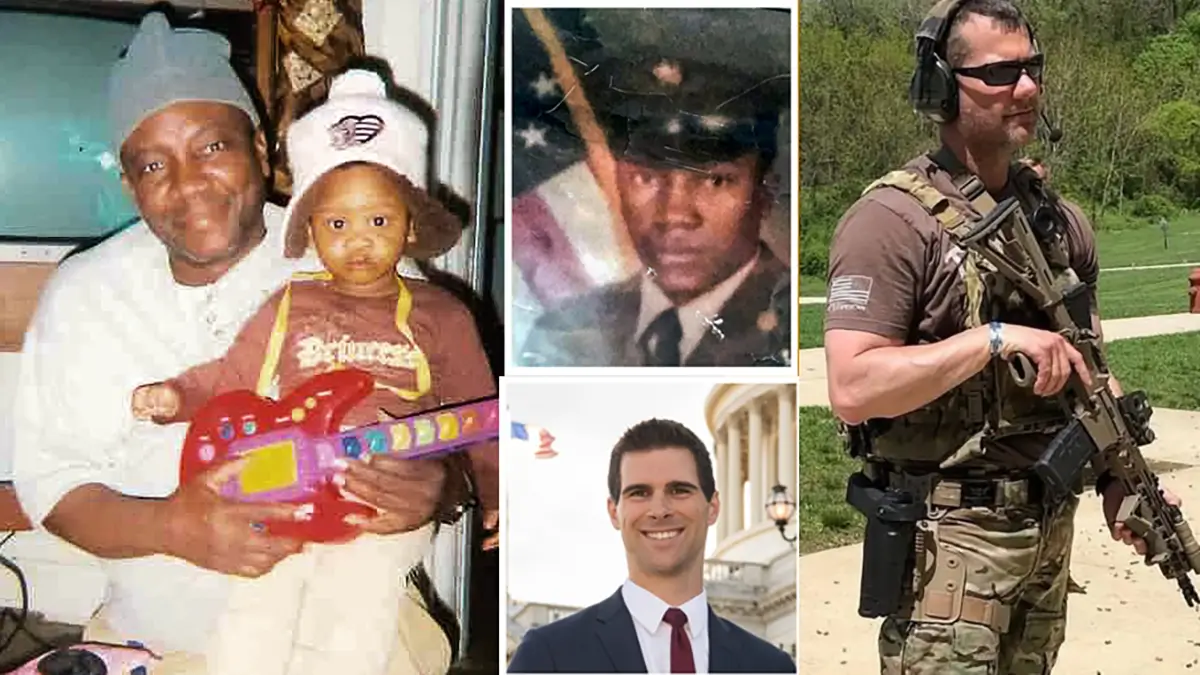
Don Clark Sr., a beloved 63-year-old Black grandfather and Army veteran with a clean criminal record, was suffering from serious health issues when St. Louis police broke into his home with a no-knock warrant and killed him in 2017.
The cop who shot him nine times, Nicholas Manasco, claimed he was in fear for his life because Clark pulled out a gun and fired a shot after he was startled awake by almost two dozen cops in full military gear invading his home with flash bang grenades and a battering ram.
But the lawsuit filed after his death states the man known as “Pops” in the neighborhood, who suffered from poor hearing and fading eyesight and walked with a cane, never pulled a gun, nor did he sell drugs.
The lawsuit also accused the cops of fabricating evidence to obtain the warrant, failing to identify themselves as cops when they barged into his home, and failing to render aid after they shot him multiple times.
Last week, a Trump-appointed judge named Joshua Divine dismissed the lawsuit against the city of St. Louis and the 21 cops who participated in the no-knock raid, claiming Clark’s family did not present enough evidence to prove the cops fabricated evidence to obtain the warrant.
The judge also claimed they did not present evidence that Manasco violated “clearly established law” by killing Clark after rousing him from his sleep.
But what Divine did not mention in his 23-page opinion is that none of the cops who broke into Clark’s home were wearing body cameras — which seems like a deliberate attempt to suppress evidence, considering they came equipped with flash-bang grenades, assault rifles, body armor, a battering ram, and a warrant based on allegations from a confidential informant.
The use of body cameras in the United States increased significantly following the 2014 Michael Brown shooting in Ferguson, St. Louis County, especially after the Department of Justice issued federal grants to law enforcement agencies in 2016, the year before Clark was killed.
ArchCity Defenders, the St. Louis nonprofit advocacy group that filed the lawsuit on behalf of Clark’s family, indicated they will likely file an appeal.
“Don Clark Sr.’s family has been battling for justice for seven years, and that struggle persists despite this setback,” the organization said in a statement to local media.
‘Defendant Strode Falsified Information’
The shooting took place on February 21, 2017, after St. Louis Metropolitan Police Detective Thomas Strode obtained the warrant to raid Clark’s home, along with two other warrants to raid two other homes on the same block.
The claim filed in 2021 accuses the detective of falsifying evidence and using boilerplate language to obtain the warrants, meaning he cut and pasted the same language used in other warrants before presenting it to the judge who signed it – not much different than how Louisville police obtained the warrant that led to the shooting death of Breonna Taylor in 2020.
Defendant Strode falsified information, used boilerplate language, and lied about his surveillance, allowing him to secure the warrant without probable cause.
Defendant Strode and other Defendant Officers then created a plan and executed the “no knock” warrant, resulting in Defendant Nicholas Manasco shooting Mr. Clark to death after he was jarred awake by the sounds of a long bang from a diversionary device detonating in his home and St. Louis Metropolitan Police Department officers breaking down his door.
Defendant City of St. Louis’s policies and customs were the moving force behind Mr. Clark’s horrific last moments and all the Defendant Officers’ conduct leading up to them.
In his affidavit, Defendant Strode knowingly included false allegations that Mr. Clark had sold illegal drugs and harbored both illegal drugs and illegal firearms in his home. These allegations were attributed to confidential informants.
Upon information and belief, Mr. Clark was unarmed when Defendant Manasco began shooting him, never shot at the officers, nor did anything that would give any reason to believe that he was an immediate threat to the Defendant Officers or the public.
The claim accused police of violating Clark’s Fourth and 14th Amendment rights through unlawful search and seizure and through reckless investigation, excessive force, deliberate indifference, and wrongful death. The lawsuit also accused the city of St. Louis of negligent training.
Defendant City of St. Louis is also liable for its failure to supervise and discipline SLMPD officers for seeking warrants without probable cause, including by falsifying information and failing to corroborate confidential informant’s allegations prior to seeking warrants; deploying SWAT for all search warrants (without reasonable suspicion or probable cause to support the excessive force inherent in the use of SWAT); and otherwise violating individuals’ constitutional rights.
‘My Dad Wanted Us to Do Good in Our Life’
In his dismissal of the case, Judge Devine accused Clark’s family of not providing sufficient evidence to prove the cops had falsified information — but the public still does not know the identity and motivations of the confidential informant who supposedly tipped them off that Clark was a major drug dealer, which is what led to his death.
And it has become common knowledge within the legal industry that confidential informants have a tendency to lie because they are usually accused criminals trying to lessen the charges against them, according to the Innocence Project.
And the fact that judges are so willing to believe police and their use of confidential informants has destroyed many innocent lives.
A groundbreaking report that focused on the “snitch system,” published by the Center on Wrongful Convictions in 2004, found that incentivized witnesses were the leading cause of wrongful convictions in U.S. capital cases.
A comprehensive study of the nation’s first 200 exonerations proven through DNA testing concluded that 18% were convicted, at least in part, on the basis of informant, jailhouse informant, or cooperating alleged co-perpetrator testimony.
The Innocence Project suggests that allegations from confidential informants should be recorded to maintain a record, but considering not a single cop involved in this raid was wearing a body camera, that is probably the last thing cops want when building a case with little or no evidence against a citizen.
Much like the false confession phenomenon, the opportunity for law enforcement to “feed facts” about a crime’s commission to a potential informant is a risk that must be protected against. In light of the ever-increasingly common practice of electronically recording interrogations, efforts should also be made to electronically record informant statements to law enforcement.
Police said they found two guns inside his home, including one that had been fired that night, but his family said he was a legal gun owner who did not even have time to grab his gun and shoot.
The cops also claimed they found 8.39 grams of heroin, 0.50 grams of marijuana, and 20 pills, including one to be determined to be .005 of hydrocodone, the Washington Post reported.
But Clark’s family said that is also a lie. And, of course, without body camera video, we will never know for sure.
And while the cops and judge have portrayed Clark as a menace to society, his family remembers him as a loving father whose health was in serious decline, making him dependent on his children.
“I would go to his house, and then I would make sure that he would take his medicine,” said his son, Don Ray Clark Jr., in a video interview with ArchCity Defenders posted below, who describes his father as a loving disciplinarian who instilled strong work ethics in his children.
“I would make sure (to do) that the things that he couldn’t do on his own, like clean this bathroom, make sure the dishes are clean,” Clark Jr. continued. “Sometimes I would prepare him food.”
His daughter, Sherrie Clark-Torrance, also remembered her father fondly.
“The important thing my dad wanted for us is to do good in our life. Do better. Be a better person.”
“If these warrants are causing this much pain to people’s family, then it shouldn’t be in existence.”